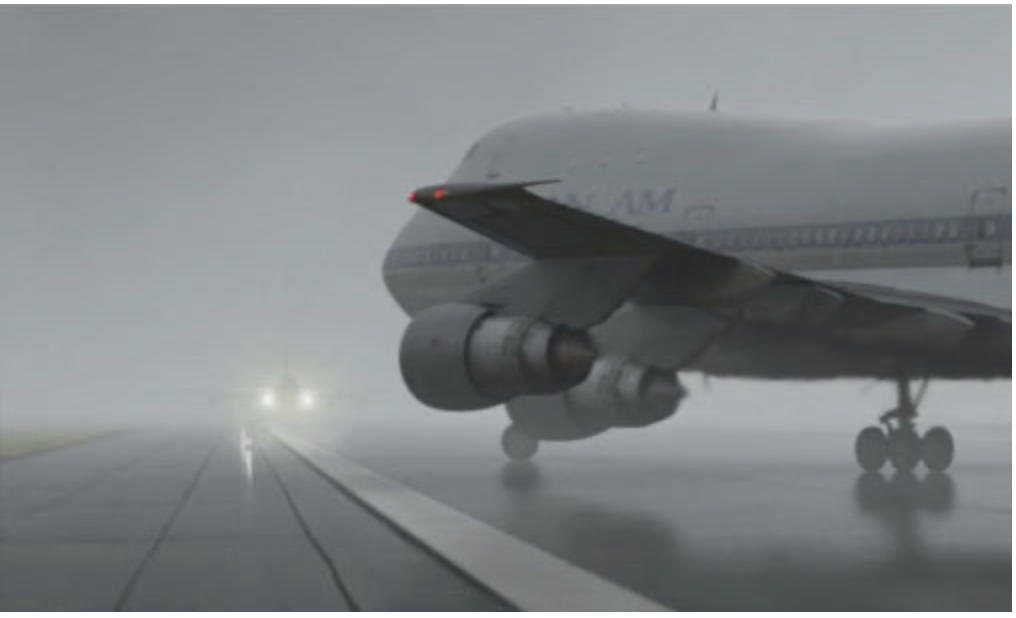
The Tenerife Accident – The Leadership Dimension
Eastern 401 and United 173 were watershed moments in that they exposed fundamental breakdowns in process and human factors. The Tenerife Accident actually occurred almost two years before United 173 but its lessons in leadership resonate even to this day. It is a complex case study but extremely useful in helping to understand the Leadership Dimension.
The incident involved two Boeing 747 jumbo jets. The first aircraft, Pan Am Flight 1736, had 380 passengers and 16 crew members. The second aircraft, KLM Flight 4805, had 234 passengers and 14 crew members aboard. Both aircraft had intended to land at Gran Canaria Airport in the Canary Islands on March 27, 1977, but had instead diverted to Los Rodeos Airport on the neighboring island of Tenerife due to a terrorist bomb explosion at Gran Canaria Airport. Los Rodeos Airport was a smaller airport without sufficient size and space to handle large commercial airliners like 747s. Nonetheless, once Gran Canaria Airport had reopened, these large airplanes would have to perform some very careful and unorthodox movement on the airfield to depart. Compounding everything, fog had begun to obscure the airfield.
From their parking locations on the airfield, air traffic control cleared the KLM jet to taxi the length of the runway and perform a U-turn at the end to position itself for takeoff. Next, air traffic control cleared the Pan Am jet to taxi almost the complete length of the runway behind KLM, but pull off on a taxiway to clear a path for KLM to depart while the Pan Am airplane would depart behind it.
The start of the critical portion of the mishap sequence started during the Pan Am’s taxi down the runway with the KLM positioned for takeoff. Again, neither aircraft could see each other in the fog. The control tower’s taxi instructions led to confusion in the Pan Am cockpit as to the proper taxiway to pull off of the runway, slowing its exit. Almost concurrently, the Captain of the KLM jet started advancing the throttles for takeoff until the First Officer stated that their aircraft had not yet been given takeoff clearance.
The tower provided the KLM crew with a departure clearance – which authorizes an aircraft to proceed along a route – but that departure clearance included the word “takeoff” in it. The First Officer read back the clearance with the cockpit voice recorder (CVR) capturing the Captain saying, “We’re going” as the First Officer had neared the end of reading the clearance. The First Officer concluded the read back by saying, “We are at takeoff.” This was – perhaps – an attempt to alert the tower and the Pan Am jet that the KLM airplane was starting its takeoff role. NOTE: route clearances never include the word “takeoff.”
The tower controller responded to the KLM’s “at takeoff” call with “OK” and then, “standby for takeoff, I will call you.” However, the KLM crew never heard anything after “OK” due to a simultaneous call from the Pan Am jet stating that they were still taxiing down the runway in the fog, causing interference on the radio which sounded like screeching. With the KLM aircraft on the takeoff roll, the tower instructed the Pan Am crew to “report the runway clear.” The Pan Am crew replied, “OK, will report when we’re clear.”
The Flight Engineer in the KLM airplane asked, “Is he not clear, that Pan American.” The KLM Captain replied emphatically, “Oh, yes,” according to the CVR.
Upon seeing the lights of the KLM jet coming at him, the Pan Am First Officer screamed at the Captain, “Get off! Get off! Get off!” The Pan Am Captain turned the airplane hard to the left and applied full power in a vain attempt to clear the runway. The KLM Captain pulled hard back on his control yoke in a similar vain effort to get airborne and avoid a collision. Though the Captain was able to get the nose clear of the Pan Am airplane, the KLM’s engines and landing gear tore through the Pan Am’s upper fuselage. The KLM jet continued briefly flying until it impacted the ground and slid about 1,500 feet beyond the impact point. Some passengers and crew were able to escape the Pan Am aircraft. All 248 people aboard the KLM aircraft died in the incident. 335 of the 396 people aboard the Pan Am aircraft died in the incident.
The Captain of the KLM aircraft was one of its most senior pilots and served as the airline’s chief of flight training. Upon learning of the crash, KLM officials suggested reaching out to the Captain for his help in investigating the incident, not knowing that he had been involved.

So how did this incident contribute to improvements in leadership in aviation and what are the lessons that organizations can learn from it too? More to follow…
In memory of all those who lost their lives aboard KLM Flight 4805 and Pan Am Flight 1736.
Leave a Reply