Leadership depends most not on a title, a job description, a position in the org chart, or anything else but one thing.
Showing Up. Specifically:
1) Being Present.
2) Setting the Correct Tone.
3) Fostering the Correct Work Environment.
4) Setting the Example.
There are a few other ways to Show Up, depending on the circumstances. But please refer to the public service announcement below on Showing Up from some friends in Blue…
Just a few-ish years ago, myself and some other young student aviators departed Naval Air Station Jacksonville, Florida in our T-45 “Goshawk” training jets to do the final phase of jet school which would require us all to land – in a sufficiently safe and precise manner – multiple times aboard the USS George Washington, at the time churning off of the north Florida coast. Known as “Carrier Qualification” or “CQ,” it was the final right of passage to earning your wings as a Naval Aviator.
In a formation of four airplanes, we arrived overhead of the ship after about 30 minutes of flying over the open Atlantic. My first thought in looking down on what seemed to be an impossibly tiny slice of metal to land on was both, “I’m petrified” and “I’m ready.”
Let’s first look at the principles of High Reliability:
1) A Preoccupation with Failure: a hypersensitivity to error, both past, present, and unanticipated.
2) A Reluctance to Simplify: the perpetual examination of the complexities and dynamics associated with systemic breakdowns.
3) Sensitivity to Operations: the integrity of the business line(s) is/are paramount.
4) A Commitment to Resilience: an understanding that failure or challenge can occur and when it does, operations can continue.
5) Deference to Expertise: the depth of knowledge is more important than the position on the org chart.
All of these principles add up such that organizations must accept that errors and disruptions will occur at any time and those errors must be managed so that first, errors do not compromise desired outcomes and second, every effort must be made to ensure that the error never occurs again. These principles form the foundation for safe operations in complex and high-consequence environments.
The Joint Commission – the quality accreditation organization for a significant portion of the nation’s healthcare systems – outlines a straightforward methodology for implementing High Reliability practices in pursuit of operations excellence. The framework consists of three elements:
1) Leadership Commitment.
2) A Pervasive Safety Culture.
3) Robust Process Improvement.
The framework forms a feedback loop in which organizational leadership promotes an environment that cultivates effective safety practices while empowering employees or groups within the organization to have a voice for change or betterment of the organization.
Most important, the first point in the framework does not say, “Leadership Approval” or “Leadership Encouragement,” etc. It says, “Leadership Commitment,” which implies an enduring effort to improve the organization. This long-term focus is critical to any High Reliability effort. Without it, it will fail.
In 2004, the United States Marine Corps experienced one of its worst years in aviation safety. There were 18 Class A aircraft mishaps, where a Class A is defined (in 2004) as aircraft damage exceeding $1 million, loss of life, or the permanent total disability of a service member. Despite it being a time when operations in Iraq and Afghanistan were underway, many of these incidents had no connection with operations overseas. In response, the leadership of Marine Aviation put into place sweeping reforms and initiatives to rebuild the safety culture and drive down these mishap trends. By 2009, Marine Corps Aviation operated with record-low mishap rates even with almost a decade of flying missions in Iraq and Afghanistan.
So how did a bunch of young and relatively inexperienced flyers bring their training jets, moving at around 120 miles per hour, aboard an aircraft carrier safely and with the desired outcome of completing the event to finish Flight School?
T-45 “Goshawk” coming aboard the USS George Washington
Communication, Decision Making, and Leadership Lessons from Right Now
My three previous posts examined case studies illustrating times when deficiencies in communication, decision making, and leadership – or some or all of these combined – prevented excellence in operations and/or screamed for overhaul in process. By the early 1980’s, the aviation industry recognized the need to place structure within its operations to stop the poor communication, flawed decision making, and lack of effective leadership.
Crew Resource Management, previously known as Cockpit Resources Management, became commonplace in aviation in the 1980s as the community extracted the difficult lessons from Eastern 401, United 173, Tenerife, and other incidents. Through improvements in process and training in communication, decision making, and leadership, aviation incidents plummeted to the point where, as mentioned in my very first blog entry, in the years between 2009 and 2025, there was only one passenger fatality in domestic commercial aviation. Before we go into the fundamental building blocks of communication, decision making, and leadership and how they contribute to making High Reliability Organizations, here are my favorite case studies in each of these areas to show how effective dedicated energy in each of these dimensions can be:
COMMUNICATION
Southwest Airlines Flight 1380 was the one passenger fatality incident between 2009 and 2025. On April 17, 2018, the flight suffered a catastrophic failure of its left engine, which resulted in significant damage to the left side of the airplane, including depressurization. If you listen to the audio in the link below, the Captain articulates the nature of the problem, succinctly requests resources for assistance, and provides continuous updates to air traffic control. Also not present on this audio, the decompression caused enough noise inside the airplane that the Captain and First Officer had to use hand signals to communicate with each other, despite being just feet apart. Here is the audio from the incident.
DECISION MAKING
USAir Flight 2998 is not an incident you have heard of. On the night December 6, 1999 in Providence, RI, a United 757 had just landed. However, it is not only dark, it is also foggy and the United crew became lost on the airfield. The impeccable decision making by the crew of USAir 2998 prevented disaster, even in the face of an air traffic controller’s certainty that what was happening was not happening. Here is the audio from the incident.
LEADERSHIP
I am including two events for leadership. The first is the “Miracle on the Hudson” because it shows excellence in all three dimensions of Communication, Decision Making, and Leadership. Of note but not in this video, the Captain consults the First Officer just before touchdown to make sure that they had not missed anything in the course of the four minutes of the incident (“got any ideas?” on the CVR at 3:20:21pm).
The second is United Airlines Flight 232. The aircraft was a McDonnell-Douglas DC-10 with 296 passengers and crew aboard on a flight between Denver and Chicago on July 19, 1989. Over central Iowa, the aircraft experienced a catastrophic failure of its tail-mounted engine which caused such extensive damage to all of the hydraulic lines of the airplane that the controls became useless for the remainder of the flight. Using differential power settings between the two wing-mounted engines, the crew managed to get the airplane back to Sioux City, IA’s Sioux Gateway Airport, despite essentially flying an uncontrollable jumbo jet. One final note: I included this clip because it shows the human side of the incident and how personal leadership can help navigate tragedy.
Eastern 401 and United 173 were watershed moments in that they exposed fundamental breakdowns in process and human factors. The Tenerife Accident actually occurred almost two years before United 173 but its lessons in leadership resonate even to this day. It is a complex case study but extremely useful in helping to understand the Leadership Dimension.
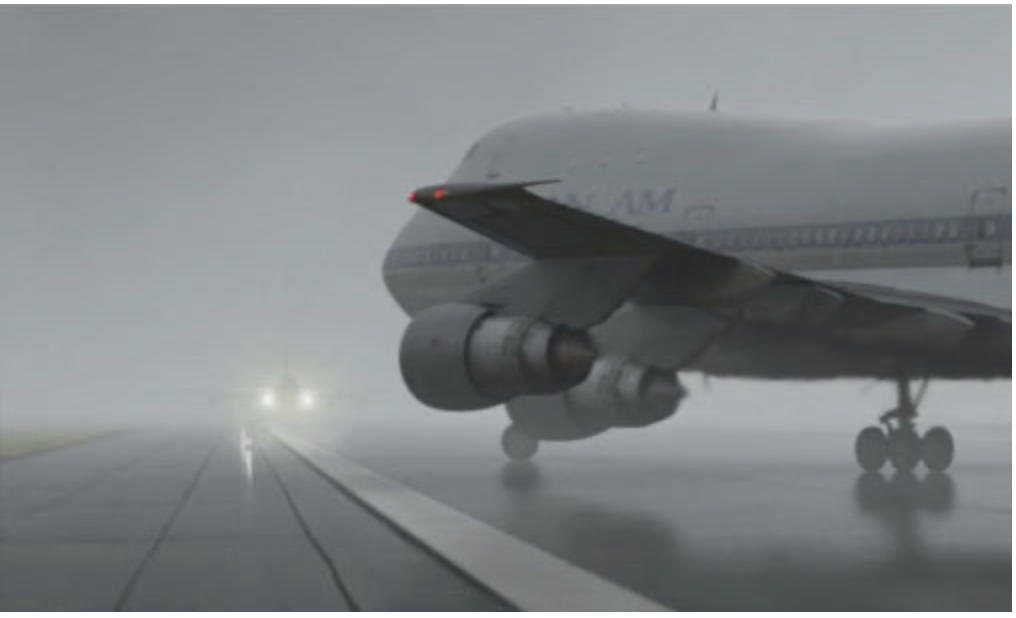
The incident involved two Boeing 747 jumbo jets. The first aircraft, Pan Am Flight 1736, had 380 passengers and 16 crew members. The second aircraft, KLM Flight 4805, had 234 passengers and 14 crew members aboard. Both aircraft had intended to land at Gran Canaria Airport in the Canary Islands on March 27, 1977, but had instead diverted to Los Rodeos Airport on the neighboring island of Tenerife due to a terrorist bomb explosion at Gran Canaria Airport. Los Rodeos Airport was a smaller airport without sufficient size and space to handle large commercial airliners like 747s. Nonetheless, once Gran Canaria Airport had reopened, these large airplanes would have to perform some very careful and unorthodox movement on the airfield to depart. Compounding everything, fog had begun to obscure the airfield.
From their parking locations on the airfield, air traffic control cleared the KLM jet to taxi the length of the runway and perform a U-turn at the end to position itself for takeoff. Next, air traffic control cleared the Pan Am jet to taxi almost the complete length of the runway behind KLM, but pull off on a taxiway to clear a path for KLM to depart while the Pan Am airplane would depart behind it.
The start of the critical portion of the mishap sequence started during the Pan Am’s taxi down the runway with the KLM positioned for takeoff. Again, neither aircraft could see each other in the fog. The control tower’s taxi instructions led to confusion in the Pan Am cockpit as to the proper taxiway to pull off of the runway, slowing its exit. Almost concurrently, the Captain of the KLM jet started advancing the throttles for takeoff until the First Officer stated that their aircraft had not yet been given takeoff clearance.
The tower provided the KLM crew with a departure clearance – which authorizes an aircraft to proceed along a route – but that departure clearance included the word “takeoff” in it. The First Officer read back the clearance with the cockpit voice recorder (CVR) capturing the Captain saying, “We’re going” as the First Officer had neared the end of reading the clearance. The First Officer concluded the read back by saying, “We are at takeoff.” This was – perhaps – an attempt to alert the tower and the Pan Am jet that the KLM airplane was starting its takeoff role. NOTE: route clearances never include the word “takeoff.”
The tower controller responded to the KLM’s “at takeoff” call with “OK” and then, “standby for takeoff, I will call you.” However, the KLM crew never heard anything after “OK” due to a simultaneous call from the Pan Am jet stating that they were still taxiing down the runway in the fog, causing interference on the radio which sounded like screeching. With the KLM aircraft on the takeoff roll, the tower instructed the Pan Am crew to “report the runway clear.” The Pan Am crew replied, “OK, will report when we’re clear.”
The Flight Engineer in the KLM airplane asked, “Is he not clear, that Pan American.” The KLM Captain replied emphatically, “Oh, yes,” according to the CVR.
Upon seeing the lights of the KLM jet coming at him, the Pan Am First Officer screamed at the Captain, “Get off! Get off! Get off!” The Pan Am Captain turned the airplane hard to the left and applied full power in a vain attempt to clear the runway. The KLM Captain pulled hard back on his control yoke in a similar vain effort to get airborne and avoid a collision. Though the Captain was able to get the nose clear of the Pan Am airplane, the KLM’s engines and landing gear tore through the Pan Am’s upper fuselage. The KLM jet continued briefly flying until it impacted the ground and slid about 1,500 feet beyond the impact point. Some passengers and crew were able to escape the Pan Am aircraft. All 248 people aboard the KLM aircraft died in the incident. 335 of the 396 people aboard the Pan Am aircraft died in the incident.
The Captain of the KLM aircraft was one of its most senior pilots and served as the airline’s chief of flight training. Upon learning of the crash, KLM officials suggested reaching out to the Captain for his help in investigating the incident, not knowing that he had been involved.
So how did this incident contribute to improvements in leadership in aviation and what are the lessons that organizations can learn from it too? More to follow…
In memory of all those who lost their lives aboard KLM Flight 4805 and Pan Am Flight 1736.