Author: Geoff “Jefe” McKeel

  • Withering Heights – Maintaining Skills vs “The Technology” (The Decision Making Dimension)

    Withering Heights – Maintaining Skills vs “The Technology” (The Decision Making Dimension)

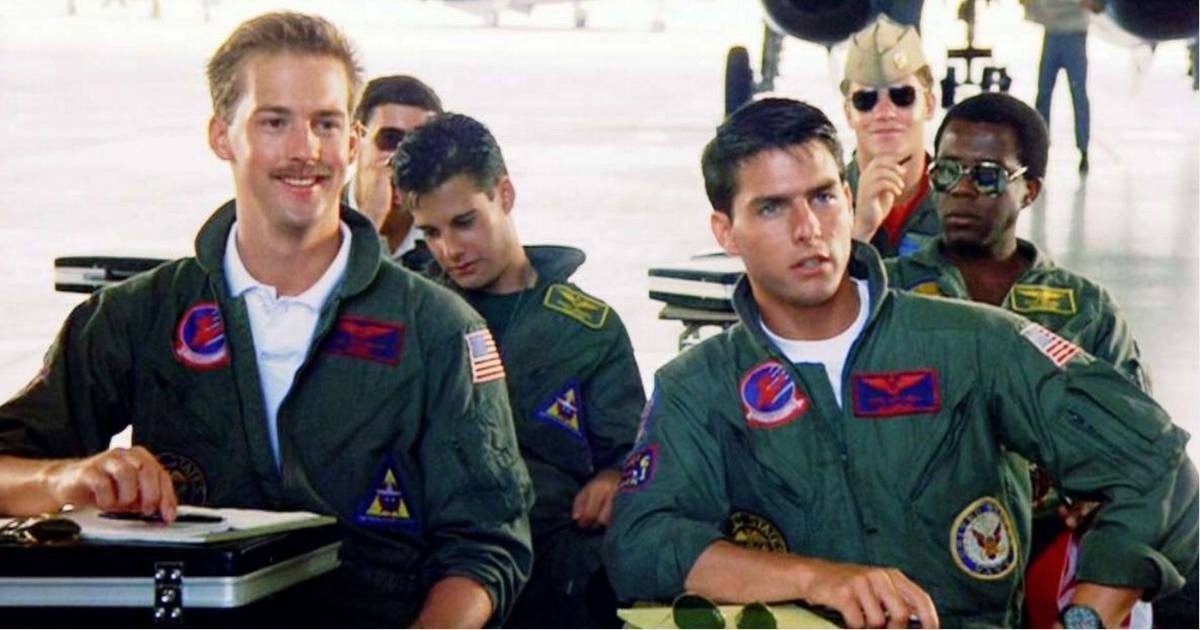
    In his introductory speech to the incoming class of the United States Navy Fighter Weapons School in the movie Top Gun, Lieutenant Commander Rick Heatherly (callsign “Jester”) explains that during the Korean War, the Navy shot down 12 enemy aircraft for every one that the Navy had shot down. He further explains that during the Vietnam War, the shoot down ratio fell to three-to-one because pilots had “become dependent upon missiles (because) they’ve lost some of their dogfighting skills.” Thanks to the creation of the school, also known as “Top Gun,” the shoot down ration at the end of the Vietnam War was back up to 12-to-1.

    img_3001

    Author’s Note: shout out to Top Gun on the movie’s 40th birthday this weekend.

    During my flying days many, many, man years ago, part of the preflight brief included a section on “Emergencies.” This portion of the brief ran the gauntlet of discussion on any issues on the ground, during takeoff, en route, etc. One item we always briefed were the “Lost Comm” procedures. In other words, what were we going to do if we lost the ability to communicate with folks on the ground? The answer was basically to remain predictable by flying our flight planned route, continue to communicate out in case someone could hear us, and follow standard procedures for landing with no communications which involved looking for light signals at the airfield.

    TECHNOLOGY VS BASIC FLYING SKILLS

    The growth of technology is only accelerating. Cell phones, artificial intelligence, the expansive internet, the Global Positioning System, and the list goes on. Discussions of technology are often parallel ideas because there can be both benefits and drawbacks. In aviation, this is a constant topic of discussion.

    The tragic loss over the Atlantic Ocean of Air France Flight 447 in 2009 showed that a crew of experienced aviators could become overwhelmed by conflicting information that prevented them from exercising basic airmanship. This is an exceptional explanation of what happened. Similarly, the crash of Asiana Airlines Flight 214 in San Francisco in 2013 was due to the lack of airspeed monitoring on final approach – the airplane was too slow and too low to make a safe landing.

    There have been other incidents where either the technology was not as helpful as advertised or that occurred despite the technology meant to help. During the “Miracle on the Hudson,” and despite the crew’s extraordinary effort to save the aircraft, Captain Sullenberger stated that the flight control technology actually worked somewhat against his ability (41:00 of the video) to make the best possible landing on the Hudson River. Just the same, the Runway Safety Program remains one of the highest safety priorities for the Federal Aviation Administration. In 2025, there were just under 1,500 events of pilots or ground crews entering the active runway without permission, an average of four incidents per day.

    SO…WHAT DO WE DO?

    First, a quick question. Can your organization function without the internet? It may be a minor inconvenience or it may be highly disruptive, but either way, organizations should be able to carry out essential functions in a technology-degraded environment.

    If the goal is to be able to function in a technology-degraded environment, organizations should train and educate their teams on exactly what that will look like and exactly what will happen when the technology downgrades or goes away completely. It may be that business has to stop for time, but not all organizations or industries have that luxury. Do you have that program in place?

    Author’s Note: shout out to Season 2 of The Pitt (spoiler alert!!!) for showing health care operations during an internet outage.

    Finally, what technology oversight or review tools do you have in place to audit the technology and/or continuously improve it? In some cases, does the implemented technology need to be discarded or replaced wholesale? This can be an extreme challenge since technology procurement can be lengthy and detailed. Updates or changes can be just as lengthy and detailed.

    As aviators, we used to get pelted with scenarios – usually in the simulator – involving degraded technology. However, we also had the responsibility to know everything about every piece of technology on the aircraft so that in case of a technology problem we could formulate a game plan. Knowing what you have, knowing what to do when what you have does not work like you expect, and knowing how to carry on when all does not work as planned/advertised is essential to preventing basic work skills from withering.

    Nurse Dana approves…

    img_2999

    More to follow…

  • The Leadership Dimension – Showing Up and Showing Up

    The Leadership Dimension – Showing Up and Showing Up

    Leadership depends most not on a title, a job description, a position in the org chart, or anything else but one thing.

    Showing Up. Specifically:

    1) Being Present.

    2) Setting the Correct Tone.

    3) Fostering the Correct Work Environment.

    4) Setting the Example.

    There are a few other ways to Show Up, depending on the circumstances. But please refer to the public service announcement below on Showing Up from some friends in Blue…

    More to follow…

  • The Communication Dimension – Wanna Learn How To Talk Like A Pilot? It May Help You as a Leader…

    The Communication Dimension – Wanna Learn How To Talk Like A Pilot? It May Help You as a Leader…

    “Communicating.”

    I have been a part of a number of organizations that wanted to “improve communication.” It was/is a very noble goal. There are studies that show the cost of ineffective or inefficient communications.

    Here’s one.

    And another one.

    And…another one.

    I’m sure there are others. And while the “fixes” for communication gaps are out there, organizations can struggle mightily to overcome the obstacles to effective communication. And I do mean mightily…

    AVIATION COMMUNICATIONS – THE SECRET

    As you read this, there is an airliner receiving the required information to fly from somewhere very near to somewhere far, far away in not that many words and in not that much time. It will sound something like this:

    “United 515 is cleared to San Francisco via the JEFE7 departure, then as filed. Upon departure, climb and maintain 5,000. Expect Flight Level 200 ten minutes after departure. Departure frequency 118.1. Squawk 0327.”

    Translated, the flight is cleared to depart the airport via a standard departure route (the “JEFE7”) and then on to its filed flight planned route (“as filed”). There are initial takeoff instructions, followed by expected climb instructions after takeoff. Finally, there is a radio frequency that the airplane will use after takeoff and the transponder code it will use (the “Squawk”) to be discretely identified on radar. This format is more or less then same for international flights also.

    But there is also an extremely simple format for almost any type of aviation communication. The format is this:

    “1)You. 2)Me. 3) My location. 4) I want to do something.”

    On the radio, it will sound like this:

    “Tower, Cessna 11 Charlie Bravo, 10 (miles) west (of the airfield), inbound (for a) full stop (landing).” Everything in parentheses is unsaid but understood by air traffic control and other aviators. So what’s the secret here?

    First, communications are standardized among all aviators, airline pilots down to student pilots. This provides a common language and mutual understanding. Second, brevity is essential (shout out to the second hour and beyond of a staff meeting…). Radio space is limited and cannot be overwhelmed by yammering. Flying into LA, New York, Chicago, and similar airspaces will cure any verbose tendencies. Finally, innuendo and ambiguity are not welcome. The nature of aviation requires a direct and pointed exchange of information.

    SO WHAT DOES THIS MEAN?

    1. How does your organization communicate? Understanding the topography of an organization’s communication tendencies is essential to any effort to improve communication, include what things or which people are the obstacles to effective communication.

    2. How do you personally communicate? Who are your trusted agents to give feedback on your communication style? Knowing this is just as essential. In aviation, post flight debriefs can still include how well communications went during the flight, even with all of these tools in place.

    3. What effective processes and practices does your organization currently use to communicate? Even an effort to improve communication can still leverage things that have worked or are working now.

    While aviation communication may not exactly translate to how you or your organization can communicate more effectively, there are some aspects to consider to overcome barriers and find efficiencies. In fact, try listening to air traffic live streams to see what all of this is about. There may be some small spot of inspiration for your communication aspirations.

    More to follow…

  • The Decision Making Dimension – When Assumption and Sound Decision Making (Almost) Collide (Bad Pun Intended)

    Two jets going 150 mph, at night, in a big sky, but only feet away…

    Some years ago, I experienced a whole headful of assuming, expectation bias, and a galling lack of willingness to speak up (even though I knew better) as a young jet pilot flying missions overseas. It was at night, returning from a “routine” outing, and everything felt easy and effortless…until it wasn’t.

    I talk about decision making as one of the three pillars of high reliability and operations excellence practices. Assumption will steamroll sound decision making. When assumption starts running roughshod over decision making, empowerment tools like intellectual space to ask questions, a “Speak Up” culture, and (cannot emphasize this enough) blatant and overt leadership advocacy of these tools can keep assumption at bay.

    I published this on LinkedIn not long ago. Enjoy the read and hope you learn a little something.

    More to follow.

    https://www.linkedin.com/pulse/time-i-told-voice-my-head-think-we-should-ok-geoff-mckeel/?trackingId=b5amIDuNTQea%2B03I%2FNX6FQ%3D%3D

  • The Communication Dimension – The “Miracle on the Hudson” and Air France Flight 447

    Passengers stand on the wings of a U.S. Airways plane as a ferry pulls up to it after it landed in the Hudson River in New York, January 15, 2009.  Local media said the plane was an Airbus with 146 passengers and five crew which had just taken off from La Guardia Airport and was trying to return after apparently striking a flock of birds.   REUTERS/Brendan McDermid (UNITED STATES)  FOR BEST QUALITY ALSO SEE: GF2E51F1M4V01

    This is a talk I gave at the International Association of Emergency Managers back in 2018 on time-critical communications and communication in emergency situations. Is your organization ready to communicate under difficult or urgent circumstances?

  • High Reliability 101 – A Pilot’s Perspective

    High Reliability 101 – A Pilot’s Perspective

    Just a few-ish years ago, myself and some other young student aviators departed Naval Air Station Jacksonville, Florida in our T-45 “Goshawk” training jets to do the final phase of jet school which would require us all to land – in a sufficiently safe and precise manner – multiple times aboard the USS George Washington, at the time churning off of the north Florida coast. Known as “Carrier Qualification” or “CQ,” it was the final right of passage to earning your wings as a Naval Aviator.

    In a formation of four airplanes, we arrived overhead of the ship after about 30 minutes of flying over the open Atlantic. My first thought in looking down on what seemed to be an impossibly tiny slice of metal to land on was both, “I’m petrified” and “I’m ready.”

    Let’s first look at the principles of High Reliability:

    1) A Preoccupation with Failure: a hypersensitivity to error, both past, present, and unanticipated.

    2) A Reluctance to Simplify: the perpetual examination of the complexities and dynamics associated with systemic breakdowns.

    3) Sensitivity to Operations: the integrity of the business line(s) is/are paramount.

    4) A Commitment to Resilience: an understanding that failure or challenge can occur and when it does, operations can continue.

    5) Deference to Expertise: the depth of knowledge is more important than the position on the org chart.

    All of these principles add up such that organizations must accept that errors and disruptions will occur at any time and those errors must be managed so that first, errors do not compromise desired outcomes and second, every effort must be made to ensure that the error never occurs again. These principles form the foundation for safe operations in complex and high-consequence environments.

    The Joint Commission – the quality accreditation organization for a significant portion of the nation’s healthcare systems – outlines a straightforward methodology for implementing High Reliability practices in pursuit of operations excellence. The framework consists of three elements:

    1) Leadership Commitment.

    2) A Pervasive Safety Culture.

    3) Robust Process Improvement.

    The framework forms a feedback loop in which organizational leadership promotes an environment that cultivates effective safety practices while empowering employees or groups within the organization to have a voice for change or betterment of the organization.

    Most important, the first point in the framework does not say, “Leadership Approval” or “Leadership Encouragement,” etc. It says, “Leadership Commitment,” which implies an enduring effort to improve the organization. This long-term focus is critical to any High Reliability effort. Without it, it will fail.

    In 2004, the United States Marine Corps experienced one of its worst years in aviation safety. There were 18 Class A aircraft mishaps, where a Class A is defined (in 2004) as aircraft damage exceeding $1 million, loss of life, or the permanent total disability of a service member. Despite it being a time when operations in Iraq and Afghanistan were underway, many of these incidents had no connection with operations overseas. In response, the leadership of Marine Aviation put into place sweeping reforms and initiatives to rebuild the safety culture and drive down these mishap trends. By 2009, Marine Corps Aviation operated with record-low mishap rates even with almost a decade of flying missions in Iraq and Afghanistan.

    So how did a bunch of young and relatively inexperienced flyers bring their training jets, moving at around 120 miles per hour, aboard an aircraft carrier safely and with the desired outcome of completing the event to finish Flight School?

    T-45 “Goshawk” coming aboard the USS George Washington

    More to follow…

  • Here We Are: Success in the Present

    Communication, Decision Making, and Leadership Lessons from Right Now

    My three previous posts examined case studies illustrating times when deficiencies in communication, decision making, and leadership – or some or all of these combined – prevented excellence in operations and/or screamed for overhaul in process. By the early 1980’s, the aviation industry recognized the need to place structure within its operations to stop the poor communication, flawed decision making, and lack of effective leadership.

    Crew Resource Management, previously known as Cockpit Resources Management, became commonplace in aviation in the 1980s as the community extracted the difficult lessons from Eastern 401, United 173, Tenerife, and other incidents. Through improvements in process and training in communication, decision making, and leadership, aviation incidents plummeted to the point where, as mentioned in my very first blog entry, in the years between 2009 and 2025, there was only one passenger fatality in domestic commercial aviation. Before we go into the fundamental building blocks of communication, decision making, and leadership and how they contribute to making High Reliability Organizations, here are my favorite case studies in each of these areas to show how effective dedicated energy in each of these dimensions can be:

    COMMUNICATION

    Southwest Airlines Flight 1380 was the one passenger fatality incident between 2009 and 2025. On April 17, 2018, the flight suffered a catastrophic failure of its left engine, which resulted in significant damage to the left side of the airplane, including depressurization. If you listen to the audio in the link below, the Captain articulates the nature of the problem, succinctly requests resources for assistance, and provides continuous updates to air traffic control. Also not present on this audio, the decompression caused enough noise inside the airplane that the Captain and First Officer had to use hand signals to communicate with each other, despite being just feet apart. Here is the audio from the incident.

    DECISION MAKING

    USAir Flight 2998 is not an incident you have heard of. On the night December 6, 1999 in Providence, RI, a United 757 had just landed. However, it is not only dark, it is also foggy and the United crew became lost on the airfield. The impeccable decision making by the crew of USAir 2998 prevented disaster, even in the face of an air traffic controller’s certainty that what was happening was not happening. Here is the audio from the incident.

    LEADERSHIP

    I am including two events for leadership. The first is the “Miracle on the Hudson” because it shows excellence in all three dimensions of Communication, Decision Making, and Leadership. Of note but not in this video, the Captain consults the First Officer just before touchdown to make sure that they had not missed anything in the course of the four minutes of the incident (“got any ideas?” on the CVR at 3:20:21pm).

    The second is United Airlines Flight 232. The aircraft was a McDonnell-Douglas DC-10 with 296 passengers and crew aboard on a flight between Denver and Chicago on July 19, 1989. Over central Iowa, the aircraft experienced a catastrophic failure of its tail-mounted engine which caused such extensive damage to all of the hydraulic lines of the airplane that the controls became useless for the remainder of the flight. Using differential power settings between the two wing-mounted engines, the crew managed to get the airplane back to Sioux City, IA’s Sioux Gateway Airport, despite essentially flying an uncontrollable jumbo jet. One final note: I included this clip because it shows the human side of the incident and how personal leadership can help navigate tragedy.

    More to follow…

  • How We Got Here (Part 3 of 3) – “We Are At Takeoff”

    How We Got Here (Part 3 of 3) – “We Are At Takeoff”

    The Tenerife Accident – The Leadership Dimension

    Eastern 401 and United 173 were watershed moments in that they exposed fundamental breakdowns in process and human factors. The Tenerife Accident actually occurred almost two years before United 173 but its lessons in leadership resonate even to this day. It is a complex case study but extremely useful in helping to understand the Leadership Dimension.

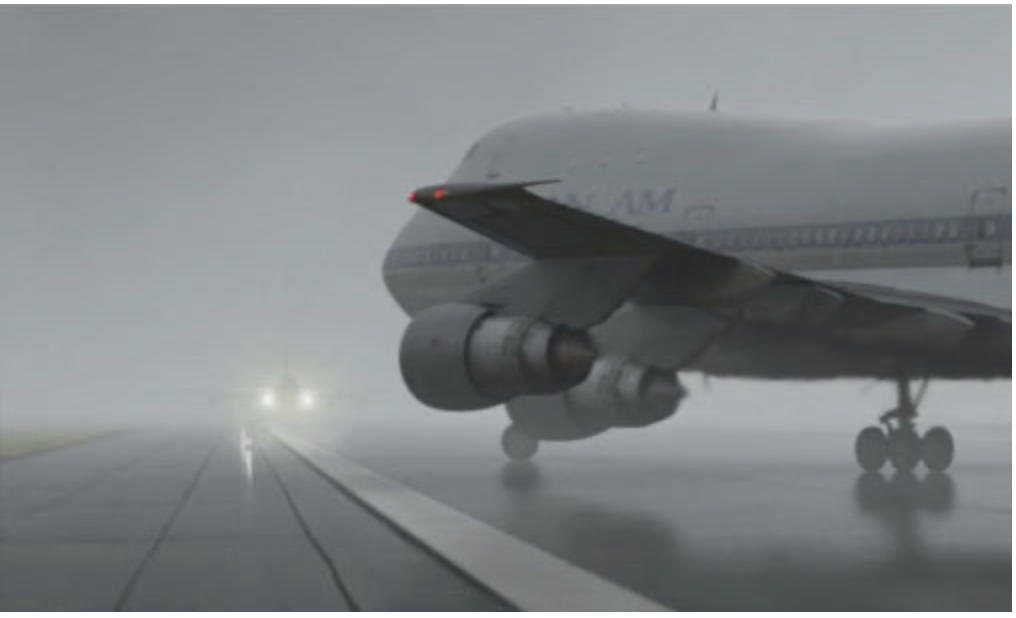
    The incident involved two Boeing 747 jumbo jets. The first aircraft, Pan Am Flight 1736, had 380 passengers and 16 crew members. The second aircraft, KLM Flight 4805, had 234 passengers and 14 crew members aboard. Both aircraft had intended to land at Gran Canaria Airport in the Canary Islands on March 27, 1977, but had instead diverted to Los Rodeos Airport on the neighboring island of Tenerife due to a terrorist bomb explosion at Gran Canaria Airport. Los Rodeos Airport was a smaller airport without sufficient size and space to handle large commercial airliners like 747s. Nonetheless, once Gran Canaria Airport had reopened, these large airplanes would have to perform some very careful and unorthodox movement on the airfield to depart. Compounding everything, fog had begun to obscure the airfield.

    From their parking locations on the airfield, air traffic control cleared the KLM jet to taxi the length of the runway and perform a U-turn at the end to position itself for takeoff. Next, air traffic control cleared the Pan Am jet to taxi almost the complete length of the runway behind KLM, but pull off on a taxiway to clear a path for KLM to depart while the Pan Am airplane would depart behind it.

    The start of the critical portion of the mishap sequence started during the Pan Am’s taxi down the runway with the KLM positioned for takeoff. Again, neither aircraft could see each other in the fog. The control tower’s taxi instructions led to confusion in the Pan Am cockpit as to the proper taxiway to pull off of the runway, slowing its exit. Almost concurrently, the Captain of the KLM jet started advancing the throttles for takeoff until the First Officer stated that their aircraft had not yet been given takeoff clearance.

    The tower provided the KLM crew with a departure clearance – which authorizes an aircraft to proceed along a route – but that departure clearance included the word “takeoff” in it. The First Officer read back the clearance with the cockpit voice recorder (CVR) capturing the Captain saying, “We’re going” as the First Officer had neared the end of reading the clearance. The First Officer concluded the read back by saying, “We are at takeoff.” This was – perhaps – an attempt to alert the tower and the Pan Am jet that the KLM airplane was starting its takeoff role. NOTE: route clearances never include the word “takeoff.”

    The tower controller responded to the KLM’s “at takeoff” call with “OK” and then, “standby for takeoff, I will call you.” However, the KLM crew never heard anything after “OK” due to a simultaneous call from the Pan Am jet stating that they were still taxiing down the runway in the fog, causing interference on the radio which sounded like screeching. With the KLM aircraft on the takeoff roll, the tower instructed the Pan Am crew to “report the runway clear.” The Pan Am crew replied, “OK, will report when we’re clear.”

    The Flight Engineer in the KLM airplane asked, “Is he not clear, that Pan American.” The KLM Captain replied emphatically, “Oh, yes,” according to the CVR.

    Upon seeing the lights of the KLM jet coming at him, the Pan Am First Officer screamed at the Captain, “Get off! Get off! Get off!” The Pan Am Captain turned the airplane hard to the left and applied full power in a vain attempt to clear the runway. The KLM Captain pulled hard back on his control yoke in a similar vain effort to get airborne and avoid a collision. Though the Captain was able to get the nose clear of the Pan Am airplane, the KLM’s engines and landing gear tore through the Pan Am’s upper fuselage. The KLM jet continued briefly flying until it impacted the ground and slid about 1,500 feet beyond the impact point. Some passengers and crew were able to escape the Pan Am aircraft. All 248 people aboard the KLM aircraft died in the incident. 335 of the 396 people aboard the Pan Am aircraft died in the incident.

    The Captain of the KLM aircraft was one of its most senior pilots and served as the airline’s chief of flight training. Upon learning of the crash, KLM officials suggested reaching out to the Captain for his help in investigating the incident, not knowing that he had been involved.

    So how did this incident contribute to improvements in leadership in aviation and what are the lessons that organizations can learn from it too? More to follow…

    In memory of all those who lost their lives aboard KLM Flight 4805 and Pan Am Flight 1736.

  • How We Got Here (Part 1 of 3) – The “Lightbulb Moment”

    Eastern Airlines Flight 401 – The Communication Dimension

    At 11:33pm EST on December 29, 1972, the First Officer of Eastern Airlines Flight 401 lowered the landing gear handle to configure the Lockheed L-1011 for landing at Miami International Airport. After lowering the handle, only the green lights for the left and right main landing gear illuminated to tell the crew that those specific set of gear were down and locked. The light for the nose landing gear did not illuminate, so the crew discontinued the approach.

    From the cockpit voice recorder (CVR) at 11:34:05pm —

    Captain: “Well ah, tower, this is Eastern, ah, 401. It looks like we’re gonna have to circle, we don’t have a light on our nose gear yet.”

    Tower granted the request, instructed the crew to climb to two thousand feet, and to switch back over to approach control. Approach control further instructed the crew to turn north and then west to hold over The Everglades to troubleshoot the problem. The First Officer placed the autopilot on so that the crew could determine the extent of the issue.

    For the next six minutes, the crew continued to troubleshoot the indicator light, going as far as dispatching the Flight Engineer to an avionics bay beneath the cockpit to look through a small portal to determine the position of the landing gear. But the crew would never get the chance to resolve the problem.

    CVR at 11:42:05pm —

    First Officer: “We did something to the altitude.”

    CVR at 11:42:07pm —

    First Officer: “We’re still at two thousand, right?”

    CVR at 11:42:09pm —

    Captain: “Hey, what’s happening here?”

    CVR at 11:42:12pm —

    Sounds of impact.

    The airplane was in a left turn when the impact sequence started in The Everglades. The left wing tip made contact with the ground first, followed by the main portion of the fuselage, and then the outer portion of the right wing section tore free from the fuselage just after the fuselage had made contact with the ground. The tail section of the airplane and its tail-mounted engine came to rest forward of the main section of the fuselage as it continued to deliver thrust through much of the breakup of the airplane. 101 of the 176 occupants – including the Captain, First Officer, Flight Engineer, and two Flight Attendants – lost their lives in the crash.

    The National Transportation Safety Board (NTSB) determined that “the probable cause of this accident was the failure of the flightcrew to monitor the flight instruments during the final 4 minutes of flight, and to detect an unexpected descent soon enough to prevent impact with the ground. Preoccupation with a malfunction of the nose landing gear position indicating system distracted the crew’ s attention from the instruments and allowed the descent to go unnoticed.” NTSB investigators believed that the Captain accidentally bumped his control yoke when he turned around to speak with the Flight Engineer during troubleshooting. By bumping his yoke, this disengaged the autopilot and placed the airplane in a very slight descent. Since it was nighttime over a featureless and unlighted area, the crew was unable to sense the descent nor have visual cues outside to indicate that the airplane was slowly headed toward the ground.

    One other discovery as part of the investigation: the nose landing gear was down and locked. The lightbulb on the indicator panel had burned out.

    So how did this incident contribute to effective communication in aviation and what are the lessons that organizations of any type can learn from it as well? More to follow…

    Here is the NTSB accident report.

    In memory of those who lost their lives aboard Eastern Airlines Flight 401.

  • In Memory of Antoine Forest and Mackenzie Gunther

    To the cockpit team of Jazz Air Flight 646, you will be missed and it was privilege to share the airspace with you both.